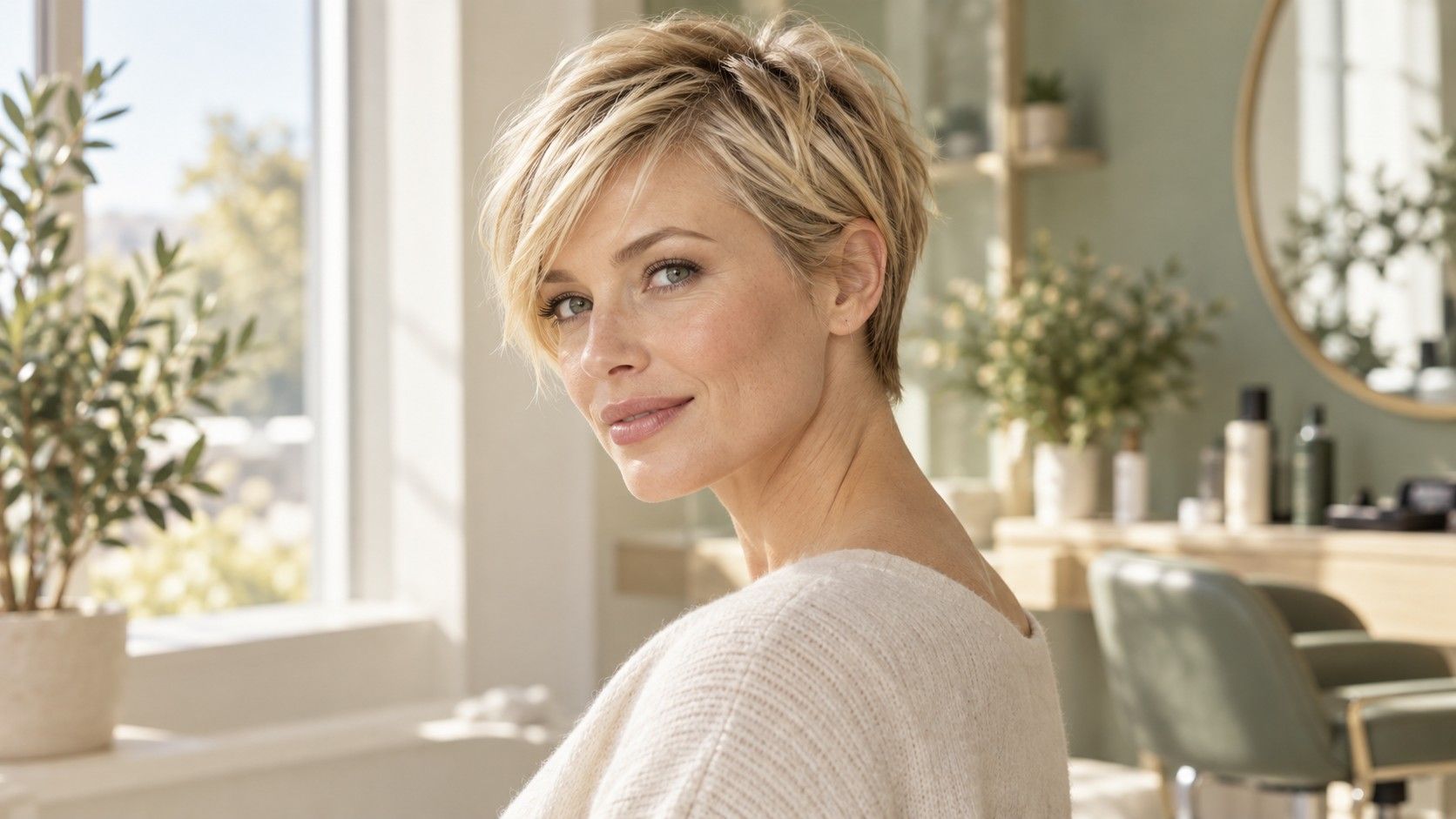
Going short changes small routines before it changes anything else: where you tuck your hair, whether a clip holds it and how the back looks after sleeping. An oval face does not settle those questions for you. If you are comparing a pixie with a bob, think about how much hair you want around your ears and neck, how often you want the outline refreshed and what happens if you decide to grow it again. The most useful short haircut is one whose ordinary days appeal to you as much as its salon photograph.
Choose what you want to leave visible
Pull your hair back, then release small sections around your ears and temples. This rough experiment helps you notice whether you enjoy an open outline or prefer a little movement beside the face. It cannot reproduce a finished haircut, because tied hair lies differently from short hair, but it can reveal preferences before you choose a length. Try it with the glasses and earrings you wear most often.
A close side exposes the ear and makes the edge of the haircut easy to see. A longer side section offers a softer frame and something to tuck. Neither is compulsory for short hair on an oval face. The practical distinction is access: can you tolerate hair brushing your cheek, and do you want it held away during work or exercise? Ask to see where each section would land when it is left alone.
Check the nape as carefully as the front. A high neckline, scarf or helmet may catch the ends of a bob; a closely cut nape can feel quite different against clothing. If you have always worn longer hair, the exposed neck may take a little getting used to. You can choose a gradual transition with more coverage first, without treating a very short cut as the inevitable destination.
Compare pixies by their outline, not their name
The word pixie covers a wide range. One version has close sides and a longer top; another keeps softness around the ears and a longer fringe. Compare the height at the crown, the width through the sides and the direction of the front. A taller top gives a different impression from a flatter, forward shape even when both photographs carry the same haircut label.
If you are considering a pixie cut for an oval face, ask how the fringe behaves without a finishing iron. A long diagonal section might fall into your eyes when you lean forward, while a shorter fringe has less weight to help it lie down. Show the stylist your natural part and the direction of the front roots. A swept finish needs agreement from the hair or a daily styling step.
Look at the cut from behind. Close tapering can create a distinct outline that you may want refreshed regularly, whereas a softer nape leaves more room for change between visits. Discuss whether you want the ears fully clear or partly covered. Those details make the consultation concrete and help avoid the common disappointment of liking the front while finding the sides too exposed.
Set the bob length on your own face
For a bob on an oval face, point to the exact place you want the front edge to reach. Chin length, jaw length and just above the shoulders are not interchangeable. The ends may also sit differently when turned inward, waved or tucked. Ask the stylist to show the intended line with your head level and shoulders relaxed, then consider whether your usual styling will lift that line.
A compact bob can offer enough hair to tuck while still feeling quite short at the back. A longer front with a shorter back changes that balance again. Before choosing, ask how easily the shape can be worn with your normal part. A reference styled in a deep side part may hide the shorter section, and the same perimeter can look less even when moved to the middle.
Pay attention to contact points. Ends that land against a collar or shoulder can turn outward as they move, which you might enjoy or find annoying. If you want a smooth line with minimal effort, discuss those points instead of assuming that a slightly longer bob will always be easier. The best stopping place is partly about the shape you like and partly about the surfaces your hair meets.
Have the cowlick conversation before the cut
Shorter hair has less length to weigh it down, so growth direction can become more noticeable. Ask the stylist to inspect the crown, the front hairline and the nape before washing or styling changes their behavior. Explain which pieces already stand up after sleep. A cowlick does not rule out short hair, but it can influence where keeping a little length makes the result easier to manage.
Density also changes how a short silhouette reads. A closely cut area may reveal more scalp than the reference suggests, while a dense section can become wider as it dries. Ask what the proposed length will do in each area of your own head. If you are unsure about a very close side, choosing a longer starting point gives you room to shorten it after you have seen the outline.
For curls and waves, discuss the dry length of the shortest sections. A fringe or piece above the ear may lift differently from the top, and a neat wet outline does not show the whole result. Mention whether you reshape your pattern with water each morning or usually leave it alone. That detail affects whether a close crop or a little more length fits the routine you want.
Test the maintenance you are agreeing to
Short can mean less drying time and more attention to direction. A pixie may need the front dampened after sleep; a bob may need its edge guided into place. Ask for a simple version of the finish using the tools you already have. Watch what happens before the final styling product goes on, since that is closer to the shape you will meet on a hurried morning.
Discuss appointments in terms of tolerance. Some people enjoy a soft outline as it lengthens; others dislike the moment a section touches an ear. Tell the stylist which one sounds like you. The required schedule depends on the cut, growth and your preference, so ask what signs would indicate a useful tidy-up. Avoid choosing a sharp edge solely from a picture if maintaining it would become a chore.
There are practical costs beyond the original appointment: travel to the salon, products, time drying and perhaps a small tool for the fringe. None needs to be elaborate, but each belongs in the decision. If the demonstration requires more work than you expected, ask for a shape with a more forgiving finish. A haircut that works only on your most patient mornings is a narrow kind of convenience.
Plan the route from short to longer hair
Before a major cut, ask what growing it out would involve. With a pixie, the top, sides and nape can reach awkward stages at different times. The back may feel long while the front is still too short to tuck. A future appointment can adjust that relationship, but removing length everywhere at every visit may delay the overall change you want. Make the next direction clear when you book.
Keep a few photographs that show intermediate lengths you actually like. Moving toward a bob may involve a softer crop and then an ear-length outline before the front reaches the jaw. Those stages will depend on your starting cut and growth, so there is no reliable calendar that fits everyone. Ask which sections should be preserved and which edges can be tidied while the others catch up.
A bob has its own transition points, especially when the ends begin meeting the shoulders. You may choose to wear a bend, tuck one side or change the part during that stage. Small clips can be useful once there is enough length to hold them, but test comfort rather than collecting accessories in advance. Give the cut space to change, then adjust the bits that genuinely bother you. Growing out short hair is easier when each appointment has a direction instead of simply recreating the last shape.