One selfie suggests a long face, another looks wider, and the mirror seems to disagree with both. That does not mean you need to discover which image reveals the one correct shape. A photograph is a view made from a particular position, with particular light and framing. If you are using an oval face label to explore hairstyles or glasses, a consistent reference is more useful than a collection of contradictory close-ups. Start by checking how the pictures were made before treating their differences as changes in your features.
Check the camera distance before comparing proportions
A close camera gives a different perspective from one positioned farther away. Features nearer the camera appear larger relative to features farther behind them, so a close selfie can change the apparent relationship between the middle of the face and its outer outline. The effect depends on the setup. There is no single distance at which every phone produces a definitive face-shape portrait, and an arm-length photograph should not be treated as a measurement standard.
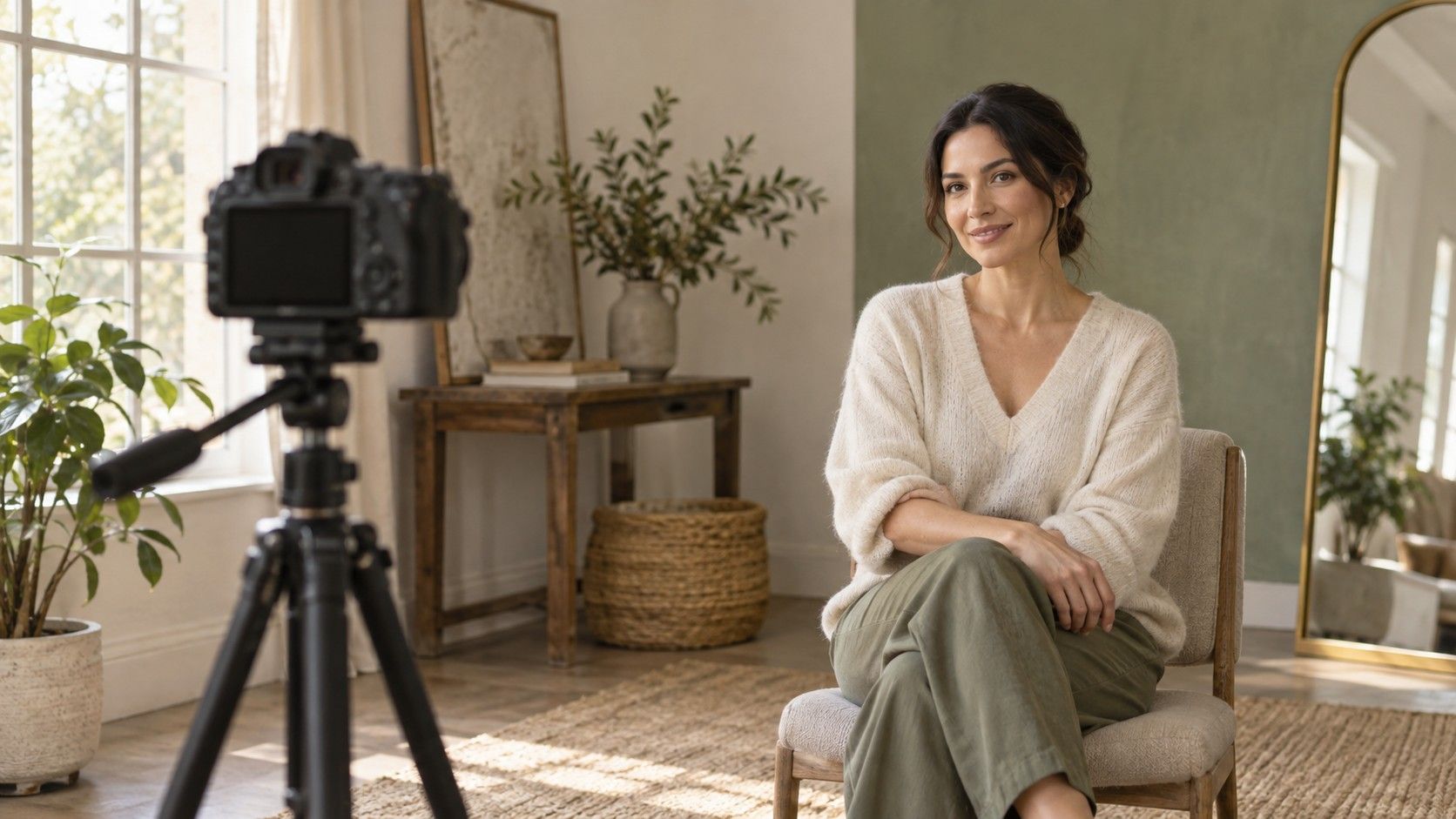
For a useful comparison, place the phone farther away on a stable support and use a timer, or ask someone to take the picture. Keep the face near the centre of the image and leave room around the head. Compare that result with the close selfie without changing your expression or head angle. The point is to see whether the impression shifts when the viewpoint changes, rather than choosing the picture you find most pleasing.
Do not confuse cropping with a change of viewpoint. Enlarging the face within an existing photograph changes what fills the screen, but it does not recreate a photograph taken from a different position. Similarly, switching a phone's zoom setting may involve a lens change or a crop depending on the device. Keep the setup simple and note what you used, so the next reference can be made in a similar way.
Keep your head level and your camera in one place
A raised camera can show more forehead and change how much of the lower face is visible. A low viewpoint changes the relationship again. Turning slightly to one side makes the nearer side and farther side look different, even when the movement feels small. Before comparing photographs, check whether your nose points in the same direction and whether both ears are similarly visible, allowing for your natural asymmetry.
Set the camera approximately at face level, then look towards it with your head in a comfortable, upright position. Avoid lifting the chin to sharpen the jaw outline or lowering it to fit into the frame. Those poses may be fine for a portrait you enjoy, but they make a poor comparison with a relaxed mirror view. A chair and a stable phone support are useful because they remove some of the movement of holding the camera.
Take a few frames while keeping the position steady, then choose one with a neutral, unforced posture. If you also want a side view, treat it as additional information rather than comparing its outline directly with the front view. Faces have depth. A front photograph cannot show the profile in the same way, and combining unlike views into a single numerical label can conceal more than it explains.
Compare the same expression in similar light
A broad smile, a relaxed mouth and a deliberately tightened jaw produce different visible outlines. Smiling lifts the cheeks and changes the mouth area; tension can make the lower face look different from its resting appearance. If two pictures disagree, check the expression before studying face width. Use a relaxed expression for your reference, and keep an ordinary smiling photograph alongside it if that is how you usually want to assess glasses or hair.
Light also changes which edges are easy to see. A strong side light can put one cheek in shadow, while overhead light can deepen shadows below facial features. For a straightforward reference, use even light that lets you see both sides without a hard shadow cutting across the outline. A window can work, provided the light is comfortable and reasonably consistent. You do not need to reproduce a studio portrait to make the comparison more useful.
Avoid judging small differences from one bright bathroom mirror and one dim evening selfie. Make a new pair under similar conditions instead. Watch for exposure changes that make the edge blend into the background or wash out the hairline. If the boundary is difficult to see, change the light or background rather than tracing what you think should be there. Clear edges are more helpful than a dramatic photograph.
Separate your face outline from its surrounding frame
A fringe can hide part of the forehead, and loose hair beside the cheeks can make the visible face seem narrower. For a reference intended to examine the outline, move hair away gently enough to reveal the hairline and sides without pulling your expression tight. A clip or soft band can help. Keep a second photograph with your usual hairstyle, because that is the appearance you will actually be styling around.
Glasses, a high collar and strong shadows from a hat can compete with the outline you are trying to compare. Remove those distractions for the reference if you can do so comfortably. A beard is different: it forms part of the visible lower outline, and a photograph cannot reliably reveal the jaw hidden beneath it. Note that limitation instead of treating the outside edge of the beard as a direct measurement of the face underneath.
Screen framing matters too. A very tight crop can make the face feel more dominant, while a photograph that includes shoulders gives it a different context. Use similar crops when comparing images and avoid stretching a picture to fit a layout. If you draw a rough outline, follow the visible boundary rather than forcing it into an oval template. The drawing is a visual aid, not a test you need to pass.
Treat automatic labels as suggestions to inspect
A face-shape app may return a tidy label even when the image leaves uncertainty around the hairline or jaw. That output can be a starting point for browsing styles, but the label alone does not establish how the system reached it. Check whether the service explains its categories, image requirements and limitations. Without that information, a confident result is still just an output whose basis you have not been able to assess.
If you try another photograph, keep the conditions similar. Different results from a close selfie, a smiling portrait and a tilted head do not tell you which classification is correct; they may reflect changes in the input. Do not repeatedly upload different flattering angles until the app gives the label you wanted. A more useful experiment is whether a consistent reference produces an explanation that matches what you can actually observe.
Before uploading a face photograph, read the service's information about storage, use and deletion, and decide whether you are comfortable with it. You can also compare your own images without uploading them anywhere. A face-shape category is optional for choosing frames or haircuts, and an uncertain result need not be resolved. It can be enough to know that you prefer a certain length, width or placement around your own features.
Make one reference you can repeat later
Choose a simple setup you can recreate: the same camera, a stable support, a similar position and even light. Leave enough room around the head, keep hair clear of the outline and relax your expression. Save the original photograph rather than an edited screenshot. A short note about the camera position and lighting can prevent a later comparison from becoming another puzzle about how the picture was taken.
Check the camera app for beauty effects, face reshaping and other processing settings before you use the result as a reference. The available controls vary by device. A mirrored preview may also differ from the saved image; look at the actual saved file. A reversal changes left and right and may feel unfamiliar, especially if you are used to your mirror view. Familiarity is not evidence that one version has more accurate proportions.
If you are comparing an oval face in a photo versus the mirror, ask what decision the image needs to support. For a haircut, showing the stylist your hair texture and usual part may matter more than assigning a category. For glasses, a physical fitting answers questions the photograph cannot. Keep the repeatable portrait as a calm reference, then judge the real styling choice on comfort, function and the appearance you enjoy in ordinary use.